Learn · Strategy
How much does a logo cost in the UK?
From free apps to studios: what a logo really costs in 2026, told through one candle maker's four options and a few famous price tags.
Nathan Flowers
Logo design in the UK costs anything from nothing, if you make it in a free app, to £10 to £1,099 on a marketplace such as PeoplePerHour or 99designs. A freelance designer typically quotes about £500 to £1,000, and a small studio about £1,000 to £3,500. The price follows the time spent on it and what you’re handed at the end, so two logos at the same price can be very different buys.
In 1971 Nike paid a design student, Carolyn Davidson, $35 for the Swoosh (CNBC). In 2007 the London 2012 organisers paid a reported £400,000 for its logo (Guinness World Records). Both are logos, at opposite ends of a price range that confuses most small business owners. So rather than a list of numbers, I’ll walk you through it with one founder and the four ways she could get a logo.
UK logo design costs at a glance
| Route | Typical UK price | What you usually get | Watch out for |
|---|---|---|---|
| Logo app | Free to £13 a month | A logo built from shared icons, fonts and templates | Not exclusive to you; Canva template logos can’t be trademarked |
| Marketplace (PeoplePerHour, Fiverr, 99designs) | £10 to £1,099 | Anything from one quick design to dozens of entries in a contest | Service fees, VAT and originality |
| Freelance designer | About £500 to £1,000 | One designer’s original work over a few days | Copyright only becomes yours if it’s assigned in writing |
| Small studio | About £1,000 to £3,500 for a logo, more as part of a brand | Research, several directions and a system around the logo | Check what’s included beyond the mark itself |
| Established studio or agency | About £3,000 to £25,000 | A team, research and a full identity | Usually more than a small business needs |
Prices come from the app makers, PeoplePerHour, 99designs, YunoJuno’s 2026 day rates, Whito’s June 2026 summary of nine UK price guides (freelancers and small studios) and Inkbot Design’s 2026 guide (the last row). All were checked on 19 November 2026; links are at the end.
An example: a candle maker’s first logo
Rosie isn’t a real client. She’s an example I’ve made up to walk through the options, but the choice she faces is a real one.
She makes soy candles in her kitchen in Stockport and has booked her first spring markets. She needs a logo for a jar label about the size of a business card, a banner for her stall, an Etsy shop icon and an Instagram profile picture. Her budget is whatever’s left after wax, jars and wicks.
Her label has a job most logos don’t: UK safety rules mean a scented candle’s label carries warnings and her contact details (Business Companion), so her logo has to share a small space and still be recognisable from across a market hall.
Option one: make it herself (free to £13 a month)
Rosie starts where most people do: an app. Shopify’s logo maker is free, but it only gives her a PNG, with no vector file to scale up for a banner. Wix lets her download a logo at no cost. Canva Pro, with its brand tools, is £13 a month or £100 a year (Canva).
In an evening she has something she likes. Then she reads the small print.
- Shopify’s tool warns that "similar designs could show up for other people" (Shopify).
- Wix says its icons and fonts "are not exclusive to you" (Wix).
- Canva says that with a logo made from one of its templates, your rights are non-exclusive and you can’t register it as a trade mark (Canva Help Centre).
That matters more than it sounds. The Ehrenberg-Bass Institute’s research on memorable brands found that a logo only works as a brand asset if it signals your brand and nobody else’s (Ehrenberg-Bass Institute). A template another candle maker can pick tomorrow can’t do that. In a crowd of lookalikes, nobody remembers which one was yours.
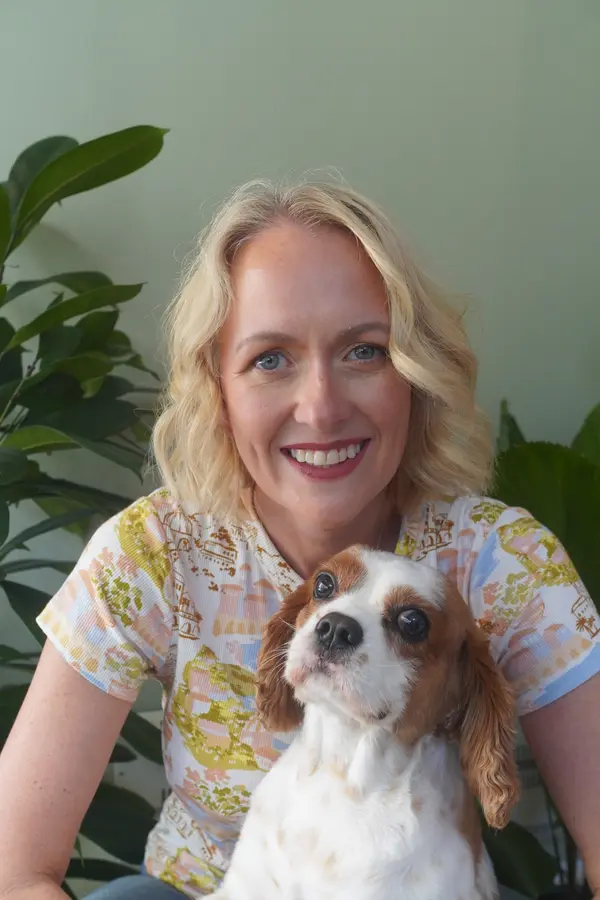
None of this makes DIY wrong, and plenty of founders start there. When Ann-Maree Shaw started her embroidery label Knotty & Nice, she believed, like a lot of business owners, that she had to do it all herself, so she designed her first logo. As a clothing designer, she wasn’t sure her skills would carry over to logo design, and she struggled to stand out. She realised that not every skill translates, and she wanted something more vibrant and modern. In 2026 we redesigned the logo, alongside her website, brand sheet and SEO.
That’s a healthy way to use a DIY logo: as a starting point you expect to replace.
What it costs Rosie: from £0, plus her time. What it doesn’t give her: a mark that’s hers alone.
Option two: a marketplace (£10 to £1,099)
Next, Rosie tries the marketplaces. On PeoplePerHour, logo offers start at £10, and most of the trending offers on the page were between £10 and £50 (PeoplePerHour). Fiverr works in a similar way and adds a service fee at checkout (Fiverr Help Centre), so the gig price isn’t the final price.
99designs runs contests instead. Rosie writes a brief, designers send entries, and she picks a winner. Its UK packages cost £249, £409, £739 and £1,099, for roughly 30 to 90 designs, and the prices exclude VAT (99designs). 99designs says the winner gets full copyright ownership, which is more than many cheap offers promise.
The catch with the cheapest end is time. At £20, nobody can spend a day on Rosie’s candles, research her competitors or test her logo at label size. Some years ago, when the designer Sacha Greif ordered $5 logos on Fiverr to see what came back, he found sellers "appropriating other designers' work" (Graphic Artists Guild).
A copied logo can cost far more than it saved. In 2019 a court found the drinks brand Rich Energy’s stag logo copied the one used by Whyte Bikes, and Rich Energy had to stop using it, even though it was on a Formula 1 car at the time (Autosport).
What it costs Rosie: £10 to about £1,100, plus fees and VAT. What to check: that the design is original and that the copyright comes to her.
Option three: a freelance designer (about £500 to £1,000)
Rosie’s friend recommends a local freelancer. The quote comes back at £1,000, and her first thought is: for a logo?
Here’s what sits behind a number like that. Most designers price by the day, and UK graphic designers booked through YunoJuno averaged £348 a day in 2026 (YunoJuno). A logo that takes two to four days, including the brief, a look at the competition, sketches, a couple of rounds of changes and the final files, comes to roughly £700 to £1,400 at that rate. That’s my calculation, not a published price. Whito’s summary of UK price guides puts freelance logos a little lower, at £500 to £1,000 (Whito).
So the useful question for Rosie isn’t "why £1,000?" but "how many days is that, and what will I get?" A cheaper quote usually means fewer days: fewer ideas tried, less checking, fewer files at the end.
One thing to get in writing: in the UK, the designer usually owns the copyright in a logo unless it’s assigned to you in writing. I’ve covered how that works in what branding costs in the UK, and it applies to every option on this page.
What it costs Rosie: about £500 to £1,000, or more for a longer job. What it gives her: an original logo, if the scope and the paperwork are right.
Option four: a studio (about £1,000 to £3,500)
The last quote Rosie gets is from a small studio, and it’s higher again. Whito’s summary puts small agencies at £1,000 to £2,000 for a logo and mid-sized ones at £2,000 to £3,500 (Whito), and Inkbot Design sets a "market floor" of about £1,500 to £2,500 for a properly structured logo project (Inkbot Design).
The difference with a studio is usually what comes around the logo: some strategy first, several directions to choose from, and the colours, fonts and rules that make it work on a label, a banner and a phone screen.
That’s how we work. At Rekognition the logo sits inside a brand package rather than on its own: Brand Essentials (£2,950) includes a strategy session, two or three logo directions, a four-page brand sheet and every final file. If you already have a logo you like, Brand Refresh (£2,250) redraws and evolves it instead. If you only need a logo, ask us and we’ll quote it on its own. Full details are on our pricing page, and we’re not VAT registered, so there’s no VAT to add.
What it costs Rosie: about £1,000 to £3,500 for a logo, and a few thousand as part of a brand. What it gives her: a logo with a system around it.
Fiverr, freelancer or studio: what’s the real difference?
| Marketplace (e.g. Fiverr) | Freelance designer | Small studio | |
|---|---|---|---|
| Time spent on your logo | Often hours | Usually a few days | Days, plus strategy |
| Research into your market | Rarely | Sometimes | Usually |
| Ideas you’ll see | Varies widely | One to three directions | Two or three directions |
| Colours, fonts and rules | Rarely | Sometimes | Usually included |
| Copyright | Check the terms | Only if assigned in writing | Only if assigned in writing |
| Best for | Testing an idea | A clear job with a clear brief | A business that needs a whole look |
The pattern is simple: you’re paying for time and thinking, not for the drawing itself. The drawing is the last hour of a good logo job.
Logo or branding: which are you buying?
The Design Council puts it plainly: "The logo is just one manifestation of a brand" (Design Council). A brand is what people think and feel about you. The logo is the badge that reminds them.
That’s why the logo is often the smallest part of the bill. When Haringey Council rebranded in 2015, the total came to £86,000, but only about £40,000 went to the brand agency. Much of the rest went on rolling it out, including £20,000 on a video, £8,000 on bin lorry panels and £7,566 on ID cards (LocalGov). Rolling a logo out costs money every time, for a council or a candle maker.
It’s also why a new logo can backfire once people know the old one. Gap dropped its new logo after about a week in 2010 (Adweek), and Tropicana brought back its old cartons after sales fell by about 20% in 2009 (Fortune). If you already have a logo people recognise, read how to rebrand a small business before you replace it.
Two of our own projects show the other side of this:
- Doctor Shrooms came to us with a smiling red toadstool they already loved. We didn’t redraw it. We studied it, then gave it movement and a voice through the nine-part Mushroom Minute video series. Sometimes the best-value logo is the one you’ve already got.
- 9 Minds needed one mark that could stretch a long way. One identity built on the "9" now carries three sister brands, for products, walks and breathwork, and the labels for three sea moss blends. That’s what a logo is worth when it’s built as a system rather than a one-off.
If you need a logo and nothing else, buy a logo. If you also need colours, fonts and a voice, you’re buying branding, and my guide to what branding costs in the UK covers that.
Which logo option fits your stage?
There’s no single right answer, but there is a sensible order, and it depends on how sure you are of the business.
- Testing the idea at a few markets: a simple DIY logo is fine, as long as you treat it as temporary and don’t print 5,000 labels with it.
- Selling steadily and planning to grow: this is when an original logo starts to pay for itself, from a freelancer or a studio, with the copyright assigned to you.
- Ready to stock shops, launch a website or trademark the name: a logo with colours, fonts and label rules around it, so every jar and post looks like it came from the same place.
Rosie picks the first step. She takes a simple app logo to her spring markets, prints labels in small batches, and puts money aside for an original logo once the orders are steady.
Whichever route you take, the same things should come with it. Before you agree any logo price, check it includes:
- The main logo plus the versions you’ll use, such as a stacked layout and a small icon for profile pictures.
- Full-colour, one-colour and white versions, for dark backgrounds and printing.
- Vector files (SVG or PDF) that scale to any size, and PNGs for everyday use.
- How many ideas you’ll see and how many rounds of changes are included.
- The copyright, assigned to you in writing once you’ve paid.
Where I might be wrong
Almost every UK logo price guide, including the ones I’ve quoted and this one, is written by someone who sells design. There’s no independent survey of what UK small businesses pay for a logo, so treat these ranges as a guide. Marketplace and app prices also change often; I checked every price here on 19 November 2026 and will update the post when they move.
Questions people ask me about logo prices
How much does a logo cost in the UK?
From nothing for an app logo, £10 to £1,099 on marketplaces, about £500 to £1,000 from a freelance designer, and about £1,000 to £3,500 at a small studio. The difference is mostly time: how many days of design work go into the logo, and whether colours, fonts and rules come with it.
Is a £20 logo worth it?
It can be, for testing an idea. At that price nobody can spend long on your business, so check the design is original and the copyright is yours, and plan to replace it if the business grows.
Can I trademark a logo I made in Canva?
Not if it’s built from one of Canva’s templates. Canva says those rights are non-exclusive and the logo can’t be registered as a trade mark. An original logo can usually be registered with the UK Intellectual Property Office (GOV.UK), and our branding cost guide lists the fees.
Do I own the logo once I’ve paid for it?
Not automatically. In the UK, the copyright usually stays with the designer unless it’s assigned to you in writing (Intellectual Property Office). Ask for a written assignment that takes effect when you pay the final invoice.
Should I pay VAT on a logo?
Only if the designer or studio is VAT registered. Some marketplace prices, including 99designs', exclude VAT, so check the total before you buy.
Logo prices in the UK: the short version
A logo costs whatever the time behind it costs. An app is free but shared, a marketplace is cheap but uneven, a freelancer is a few days of someone’s skill, and a studio wraps the logo in a system. Decide which job you need, check what you’re handed at the end, and get the copyright in writing.
Book my free call and we’ll work out what you actually need and what it would cost. Not ready to talk yet? The free Brand Health Check scores your current website in about 30 seconds.
Sources
All retrieved 19 November 2026 unless a date is given.
- 99designs: logo design pricing (UK)
- Adweek: Gap goes back to its old logo, October 2010
- Autosport: Haas title sponsor loses legal case over stag logo, 14 May 2019
- Canva: pricing (UK) and Help Centre, trademarking logos created on Canva
- CNBC: how much Nike’s founder paid for the Swoosh, 5 September 2018
- Design Council: the power of branding, 2013
- Ehrenberg-Bass Institute: brands of distinction, Jenni Romaniuk
- Fiverr Help Centre: paying for orders
- Fortune: the logo redesign that cost a million dollars, 19 May 2024
- Graphic Artists Guild: so what kind of logo can you get for $5?
- GOV.UK: register a trade mark and Intellectual Property Office, ownership of copyright works
- Guinness World Records: most expensive Olympic logo
- Business Companion (Trading Standards): candles, diffusers and oil heaters
- Inkbot Design: logo design pricing, updated 30 September 2026
- LocalGov: row erupts over council’s £86,000 new image, 17 September 2015
- PeoplePerHour: logo design
- Shopify: free logo maker
- Whito: branding design costs in the UK, compiled June 2026
- Wix: logo maker
- YunoJuno: graphic designer contractor rates 2026
- Rekognition case studies: Knotty & Nice, Doctor Shrooms and 9 Minds
- Hero photo: Flock of pigeons perched on the ground by Pooja Nitesh Kashyap on Pexels
About the author
Founder of Rekognition, with 14 years of brand and design work across twenty-plus sectors. I help people build brands that feel like a person, not a logo, and websites that people (and search engines) can actually find.