Journal · Social
You are the brand:why people buy from people
A brand was never the logo, the niche or the thing you sell. It's the feeling people are left with. Here's the comparison that proves it, and the accident that taught it to me.

Nathan Flowers
It's 2026 and everyone is building a brand. That, oddly, is the problem. New logo, tidy colour palette, a niche described in three neat words, a feed of tips and tactics. All of it correct, all of it competent, and almost none of it memorable. Because in the rush to look like a brand, most people quietly forget the one thing a brand actually is.
A brand is not your logo. It isn't your niche, and it isn't the list of things you do. Those matter, but they're the packaging. The brand itself is the feeling someone is left with after they meet you, and feelings don't come from a colour palette. They come from a person.
Don't hide behind the business
Most founders and creators build a wall between themselves and their audience. The wall is made of polish: expert language, a spotless grid, value delivered in clean little packets. It looks professional. It also makes you interchangeable, because a dozen competitors are standing behind identical walls saying almost identical things.
What a brand really needs is an ecosystem around the personality behind it. The hobbies, the opinions, the ordinary Tuesday, the reason you started at all. Not because any of that sells a service directly, but because it's the part a person can actually latch onto. It's the difference between being known about and being known.
A simple comparison
Picture two marketers. I'll introduce you to both, and then I'll ask you an honest question.
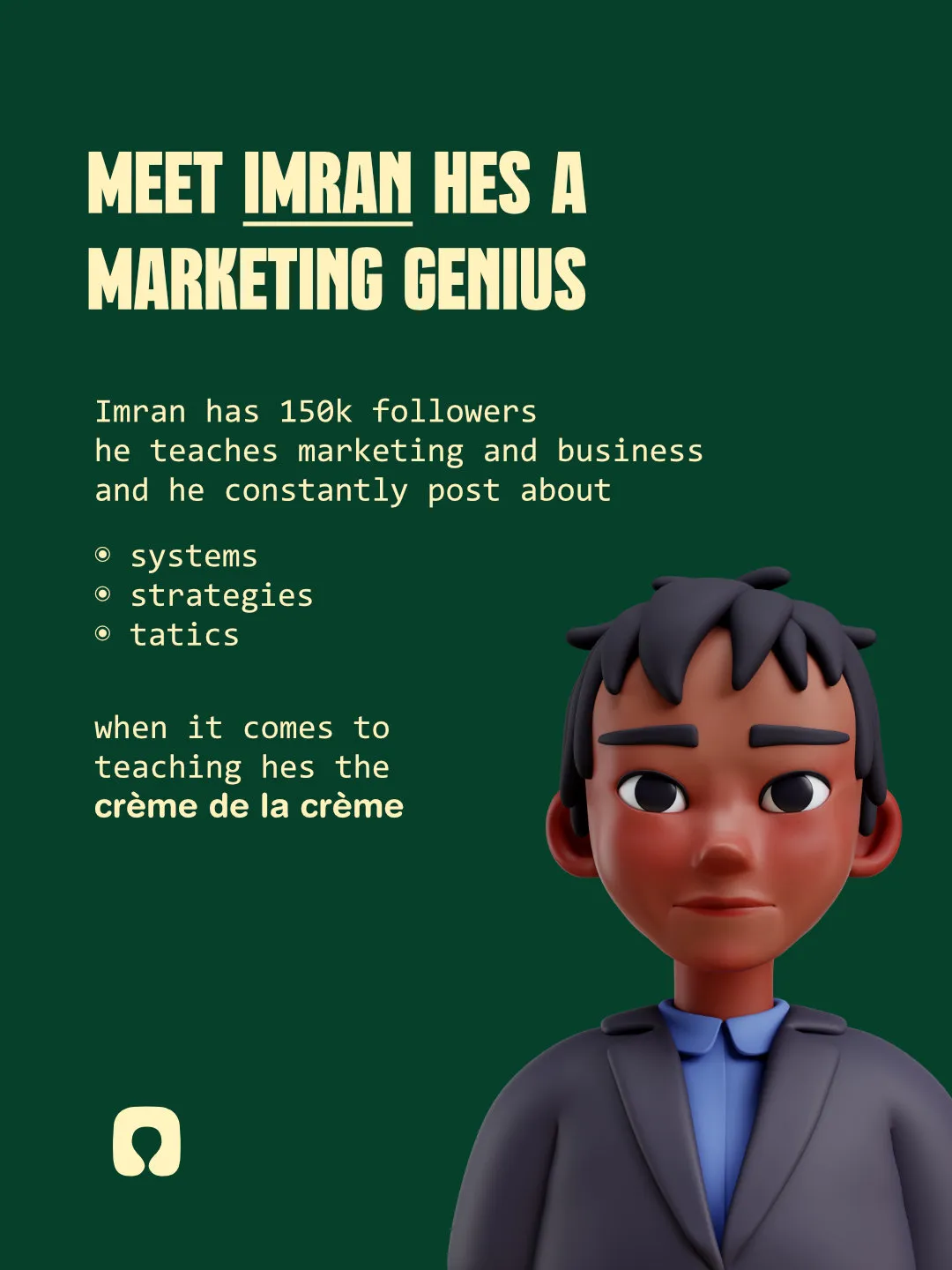
Imran has 150k followers. He teaches marketing and business, and he posts relentlessly about systems, strategies and tactics. When it comes to teaching, he is genuinely the best in the room. And yet, at the end of the day, all we really know is that his name is Imran and he's good at marketing. That's about it.
Lucy has 12k. She's decent at marketing and shares good insights too, but her content lands differently. Because Lucy doesn't only post about marketing. She's a dog mum. She loves pilates. She's been in and out of care, and she's been open about her mental health. You come away knowing what makes her tick.
You've seen the good, the bad and the ugly. So who do you actually connect with: the regimental expert, or the marketer who feels just like you?
I know who I'd pick. I'm with Lucy, and it isn't because she's better at the work. It's because she feels genuine, authentic and relatable. She let people see a real person going from rock bottom to building something, and that's a story you can stand next to. Expertise earns respect. Personality earns a relationship.
What actually fills the gap
Here's the part people get wrong when they hear all this. Being relatable does not mean turning your feed into a diary of every hard day. The gap isn't filled by oversharing, and it definitely isn't filled by trauma dumping.
It's filled by honesty. A little vulnerability, shared on purpose, is what turns a competent account into a brand people root for. Authenticity, not exposure.
Brands are the feeling, not the logo, not the niche, not the list of what you do. Once you accept that, the whole job changes. You stop performing expertise at people and start letting them meet the person doing the work.
How I found this out by accident
I'd love to tell you I engineered this from a strategy deck. I didn't. I learned brand building by sharing my own experiences, and mostly by fluke.
When I started running my own classes, I began practising breathwork to heal my own trauma. Out of pure vulnerability I'd share bits of the story on Instagram: the breathwork, the hikes, the meditation, the day to day, the mindset, the hobbies, the music. There were no comments, no likes to speak of. I genuinely thought nobody was watching. Sharing was just my own form of release.
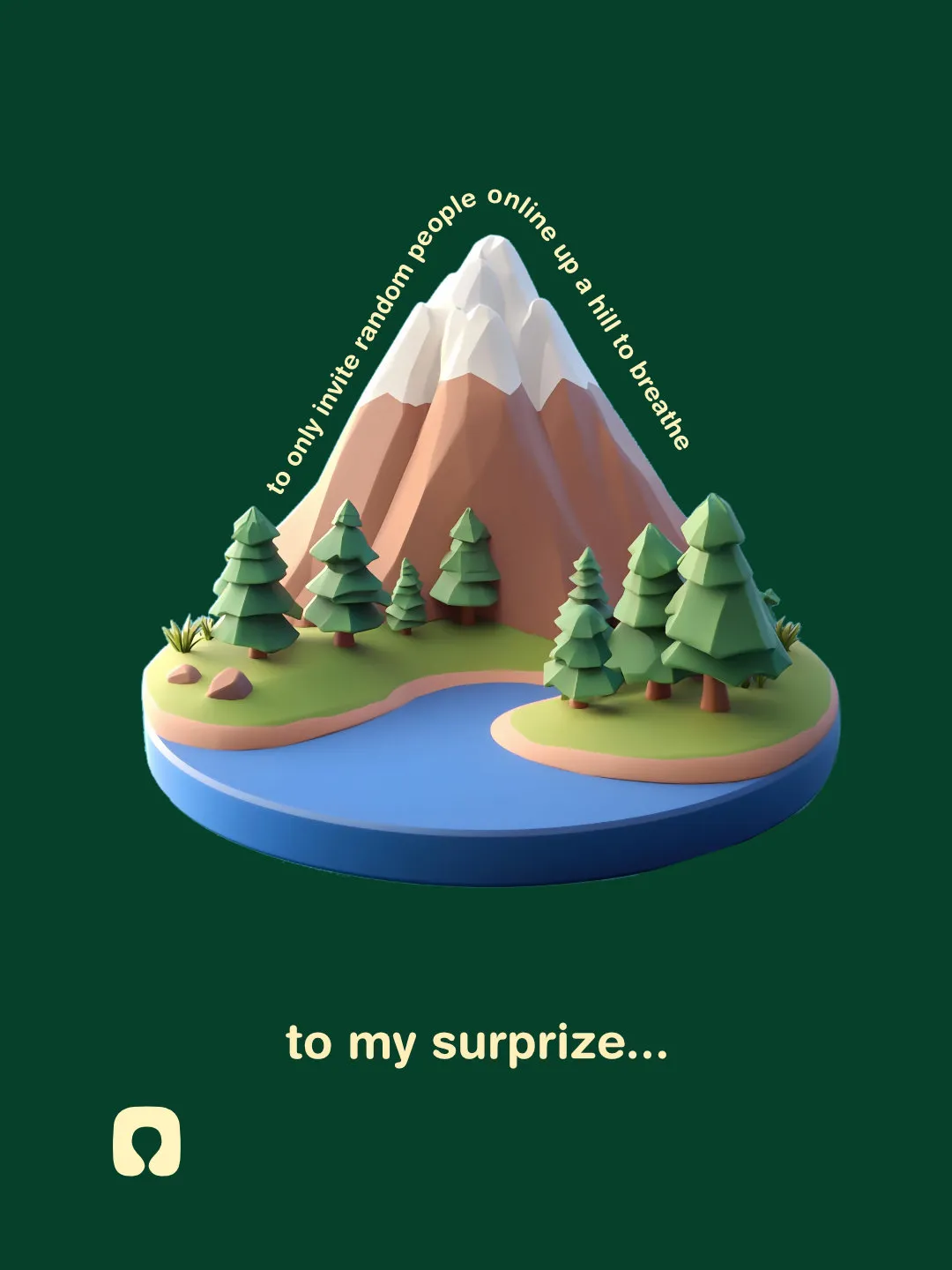
So one day, half on a whim, I invited a handful of random people from online to come up a hill and do a breathwork session in the open air. I braced myself for two or three, if I was lucky.
Twenty-eight people showed up.
Twenty-eight strangers gave up their morning because they felt like they already knew me. They'd been quietly watching the whole time, waiting for a reason to step in. No interactions didn't mean no audience. It meant an audience that hadn't been given a door yet.
People buy from people. The lesson I stumbled into
That morning on the hill taught me more about branding than any course could. People don't commit to a logo or a niche. They commit to a person they trust and a story they can see themselves in. The polish gets you noticed. The personality is what fills the gap everyone else keeps missing.
If your brand feels technically correct but strangely forgettable, this is usually why. There's a person missing from it. Put them back. If you'd like help finding where yours belongs, that's exactly the kind of conversation we love.
Written by
Nathan Flowers
Founder of Rekognition. I help people build brands that feel like a person, not a logo, drawing on hard-won lessons about honesty, storytelling and showing up as yourself.
Start a project →